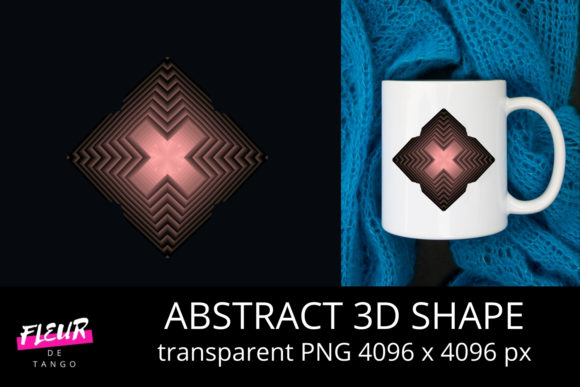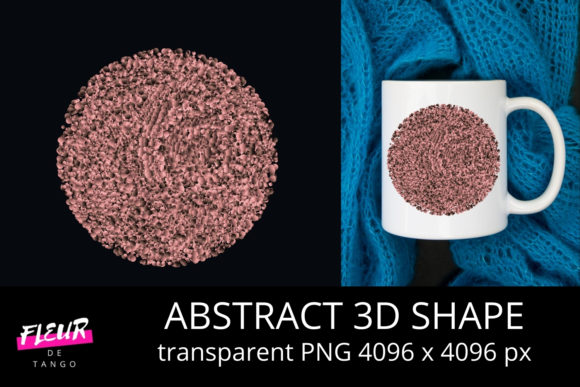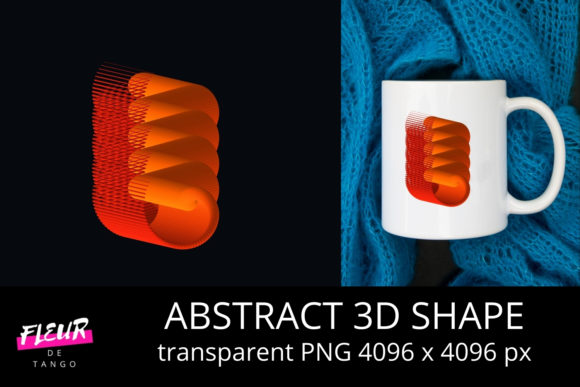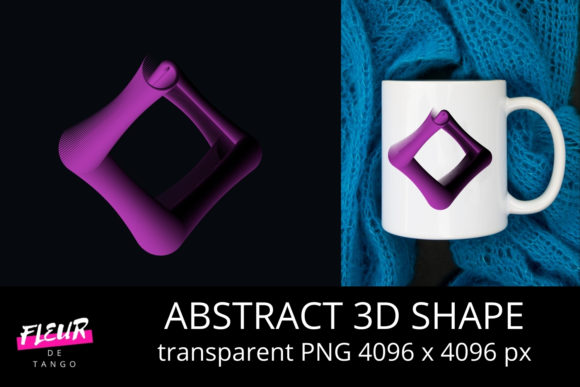
Abstract 3D Shape Clipart Vol. 47: A Practical Evaluation for Designers and Educators
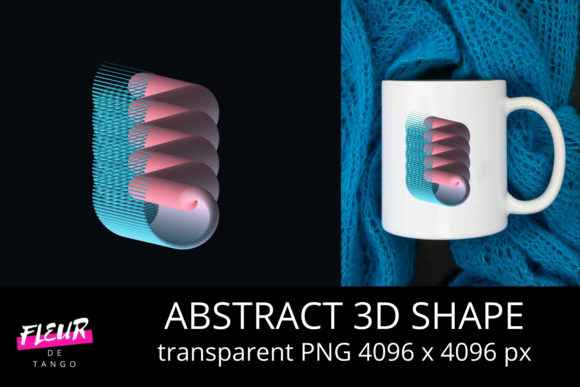
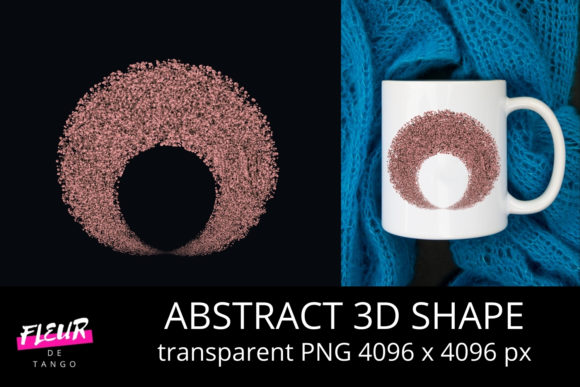
Abstract 3D Shape Clipart Vol. 47 is a curated digital asset collection featuring stylized, non-representational three-dimensional geometric forms—such as extruded polygons, faceted spheres, twisted tori, and layered prisms—designed for use in presentations, educational materials, UI mockups, and print layouts. Unlike photorealistic 3D models or complex CAD files, these assets are delivered as scalable vector graphics (SVG) and high-resolution raster files (PNG with transparent backgrounds), optimized for quick integration into common design and publishing workflows.
This volume follows a consistent editorial approach seen across the series: shapes are rendered with subtle gradients, soft ambient shadows, and clean surface treatments that suggest depth without requiring lighting setup or rendering expertise. It contains 84 unique compositions, each available in multiple color variants (including grayscale, monochrome, and accessible contrast palettes), and all assets are licensed for both personal and commercial use under a standard royalty-free agreement.
Why Evaluate Abstract 3D Shape Clipart Vol. 47?
Designers, educators, technical writers, and marketing professionals often seek visual elements that communicate structure, hierarchy, or conceptual relationships without anchoring meaning to specific objects. Abstract 3D shapes fill this niche by offering spatial presence and modern aesthetic appeal while remaining neutral in subject matter. Someone might consider Abstract 3D Shape Clipart Vol. 47 when they need:
- Consistent, on-brand visual metaphors for processes, systems, or data flows;
- Engaging yet non-distracting background elements or section dividers;
- Accessible illustrations for STEM education where realism could introduce unintended misconceptions;
- Reusable components for slide decks, infographics, or internal documentation where custom 3D modeling is impractical.
Key Benefits and Realistic Tradeoffs
The primary benefit of Abstract 3D Shape Clipart Vol. 47 lies in its balance of visual sophistication and operational simplicity. Because the assets are pre-rendered and delivered in widely supported formats, users avoid the learning curve and hardware demands associated with 3D software. No knowledge of topology, UV mapping, or material nodes is required. Integration into tools like PowerPoint, Google Slides, Figma, or Adobe InDesign typically takes seconds—not hours.
However, this convenience entails tradeoffs. These shapes are static: they cannot be rotated, re-lit, or dynamically textured after download. While color variants are provided, users cannot adjust individual surface properties (e.g., glossiness or bump intensity) without vector editing skills—and even then, results may deviate from the original intent. Additionally, because the collection emphasizes abstraction over specificity, it does not support use cases requiring accurate scale, anatomical fidelity, or engineering precision.
Another consideration is stylistic cohesion. Abstract 3D Shape Clipart Vol. 47 uses a distinct visual language—moderate beveling, low-contrast shading, and restrained color saturation. That consistency is an advantage within a single project but may clash with highly illustrative, hand-drawn, or ultra-minimalist design systems. Reviewing the full preview set before licensing is advisable to assess alignment with existing visual guidelines.
Situations Where It’s a Strong Fit
Abstract 3D Shape Clipart Vol. 47 works well in environments where speed, scalability, and conceptual clarity outweigh the need for customization or realism. For example:
- An instructional designer building online course modules on computational thinking may use its layered cubes and intersecting rings to visualize algorithmic layers or data encapsulation—without needing to explain why a “cloud” icon represents server infrastructure.
- A university communications team developing a campaign around interdisciplinary research could deploy its interlocking polyhedra across posters, web banners, and social tiles to reinforce themes of connection and complexity.
- A product manager assembling a roadmap presentation might apply its ascending helix or branching tetrahedra to represent growth phases or feature dependencies—replacing bullet points with spatial logic that audiences process more intuitively.
When Alternatives May Be More Appropriate
Not every project benefits from pre-made abstract shapes. Consider alternatives if your work involves:
- Dynamic or interactive contexts: If you’re building a web-based 3D visualization using Three.js or Spline, editable GLB models or parametric geometry generators will offer greater flexibility than static clipart.
- Brand-specific visual identity: When strict adherence to custom color systems, stroke weights, or shadow angles is required—and those parameters aren’t covered in the included variants—custom illustration or generative design tools may yield tighter alignment.
- Technical accuracy: Engineering schematics, architectural diagrams, or medical illustrations demand precise proportions and labeling. Abstract shapes lack annotation capacity and measurable scale, making them unsuitable as primary explanatory tools in those domains.
- Budget-constrained or highly iterative projects: While Abstract 3D Shape Clipart Vol. 47 offers good value per asset, teams already subscribed to services like Noun Project, Flaticon, or Adobe Stock may find comparable abstract 3D icons through existing licenses—especially if usage is occasional or experimental.
Making a Practical Decision
Evaluating whether Abstract 3D Shape Clipart Vol. 47 fits your needs starts with clarifying two questions: What role must the visuals play? and What constraints define success?
If the goal is to enhance comprehension, maintain visual rhythm, or add subtle dimensionality—without diverting time from core content development—then this volume delivers predictable, professional-grade assets. Its strength is in reducing decision fatigue, not enabling artistic experimentation. Users who prioritize repeatability over uniqueness, clarity over novelty, and efficiency over granular control will likely find it a reliable resource.
Conversely, if your workflow depends on frequent variation, real-time manipulation, or tight integration with motion design pipelines, investing time in learning a lightweight 3D tool—or commissioning bespoke assets—may yield better long-term returns. Also, check file format compatibility: while SVG and PNG cover most use cases, users relying exclusively on legacy publishing software with limited transparency support should verify rendering behavior before large-scale deployment.
Finally, consider version context. As Abstract 3D Shape Clipart Vol. 47, it belongs to an ongoing series. Earlier volumes emphasize different formal qualities—some lean toward organic curvature, others toward sharp angularity or isometric rigor. If you’ve used prior volumes successfully, continuity across versions may reinforce design coherence. If evaluating the series for the first time, reviewing samples from Vol. 45 and Vol. 46 alongside Vol. 47 helps identify stylistic evolution and determine whether the latest iteration aligns with current or upcoming project needs.