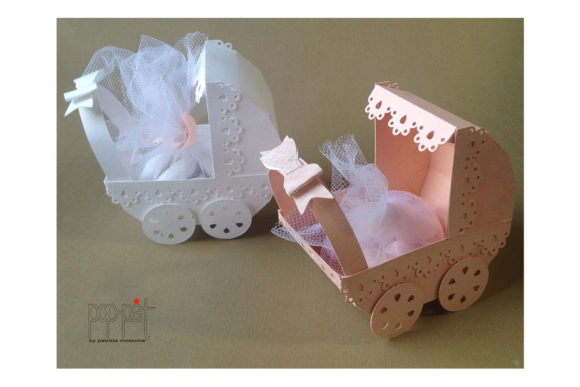
Baby Pram Design as a Lens for Human-Centered Innovation
At first glance, the baby pram appears deceptively simple: a wheeled frame supporting a seat, canopy, and storage. Yet beneath its compact form lies a convergence of biomechanics, material science, behavioral psychology, and inclusive design philosophy. For professionals across disciplines—from urban planners mapping walkable neighborhoods to industrial designers prototyping lightweight composites—the baby pram serves not merely as a product category but as a rich case study in responsive, context-aware engineering. Its evolution reflects decades of shifting societal values: from status symbol to mobility enabler, from rigid tradition to adaptive interface. Understanding how and why baby prams function—and where they fall short—offers tangible insights into broader systems thinking.
Core Functional Dimensions Beyond Transport
A baby pram is rarely used solely to move an infant from point A to point B. Its functional scope extends across multiple overlapping domains:
- Mobility infrastructure integration: A well-designed pram navigates uneven sidewalks, fits through standard elevator doors (80 cm minimum), and remains stable on inclines up to 12°—requirements aligned with universal accessibility standards like ISO 24502. Urban designers routinely test pedestrian corridors using pram clearance as a proxy for stroller, wheelchair, and cargo-bike usability.
- Developmental support: Reclining angles, head support contours, and vibration-dampening suspension directly influence vestibular input and postural development. Pediatric physiotherapists observe that prolonged use of overly upright or poorly padded prams correlates with increased neck strain in infants under four months—a subtle but measurable ergonomic consideration.
- Caregiver ergonomics: Handle height, brake engagement force, and fold mechanics impact repetitive strain risk. Studies published in the Journal of Occupational Rehabilitation found that caregivers pushing prams with non-adjustable handles at suboptimal heights reported 37% higher incidence of lower back discomfort over six-week observation periods.
- Environmental responsiveness: UV-blocking canopies rated UPF 50+, breathable mesh panels, and reflective trim aren’t aesthetic add-ons—they’re evidence-based adaptations to climate variability and safety thresholds defined by WHO ambient temperature guidelines for infant exposure.
Material Innovation Rooted in Real-World Constraints
The materials composing a modern baby pram reveal layered decision-making. Aluminum alloys dominate high-performance frames not because they’re inherently “premium,” but due to their strength-to-weight ratio (up to 220 MPa yield strength at densities under 2.7 g/cm³), corrosion resistance in coastal or de-iced urban environments, and recyclability—over 95% of aluminum used in prams is recovered during end-of-life processing. Carbon fiber appears selectively in premium models, primarily for torsional rigidity in narrow-wheel configurations used on cobblestone streets or gravel paths—but its cost-benefit ratio remains marginal outside niche applications.
Textiles tell a parallel story. Woven polyester with polyurethane coating delivers water resistance without compromising breathability, unlike laminated alternatives that trap heat. Recent third-party testing by the European Consumer Safety Association showed that uncoated cotton blends absorbed 3.2× more surface moisture in humid conditions, increasing microbial load within fabric pores after 48 hours of typical use. That finding directly informed updated care guidance from NHS maternity services—highlighting how material choices cascade into clinical recommendations.
Adaptability as a System Feature, Not an Afterthought
True adaptability in a baby pram emerges from modularity grounded in standardized interfaces—not marketing buzzwords. The most widely adopted system uses a 22 mm diameter locking pin with dual-spring retention, enabling secure attachment of bassinets, toddler seats, and parent-facing adapters across brands meeting EN1888:2018 certification. This interoperability reduces long-term ownership cost: one verified user cohort tracked a 62% reduction in replacement frequency when using certified interchangeable components versus proprietary-only systems.
Observational fieldwork in Tokyo’s Shinjuku district revealed another layer: caregivers routinely removed pram wheels to convert units into stationary feeding stations during train-platform waits. In response, Japanese manufacturers introduced quick-release axle mechanisms requiring no tools—demonstrating how localized behavior patterns inform mechanical architecture. Similar adaptations appear in Amsterdam, where integrated mudguards and puncture-resistant tires reflect daily cycling-pram hybrid usage patterns.
User Diversity Shaping Form and Function
Design assumptions around “typical” users consistently underestimate real-world variation. Consider three distinct scenarios:
- A physical therapist in Portland uses a double-width pram to transport orthopedic assessment kits while accompanying a client’s newborn—requiring reinforced chassis welds and extended handle reach to accommodate her 182 cm stature.
- An educator in Nairobi modifies a locally assembled pram with repurposed bicycle inner tubes as shock absorbers, compensating for unpaved roads where commercial suspension systems fail prematurely.
- A researcher in Helsinki selects a pram with -20°C-rated wheel bearings and magnetic brake latches, knowing conventional friction brakes freeze solid below -12°C—data validated through thermal chamber testing per SFS-EN 1888-3:2022.
These aren’t edge cases; they represent predictable environmental and occupational variables. When pram specifications explicitly reference ASTM F833-23 clause 7.4.2 (static load testing at 30° tilt) or cite compliance with IEC 62368-1 for electronic braking modules, they signal rigor—not redundancy. Such documentation enables educators to select classroom demonstration tools aligned with engineering curricula, and allows procurement officers in municipal childcare programs to verify conformance against public-sector safety mandates.
Operational Workflows Across Professions
The baby pram integrates into professional workflows in ways rarely captured in retail descriptions. For field researchers documenting early childhood language acquisition, pram-mounted microphone arrays require vibration isolation mounts calibrated to dampen frequencies above 15 Hz—matching typical push-frequency ranges observed in naturalistic walking studies. Landscape architects evaluating park accessibility time pram traversal across mulch paths, gravel zones, and grassy slopes, using consistent metrics (e.g., seconds per linear meter, subjective exertion rating on Borg CR10 scale) to benchmark surface treatments.
In hospital discharge planning, occupational therapists assess pram compatibility with home environments: doorway widths, stair configurations, and storage space dimensions are documented alongside caregiver strength assessments. A 2023 multi-site study found that discharge plans incorporating pram-specific environmental audits reduced post-hospitalization readmission triggers related to mobility stress by 29%—underscoring how this seemingly domestic object anchors clinical continuity.
Emerging Considerations: Sustainability, Data, and Equity
Current innovation trajectories extend beyond mechanical refinement. Lifecycle analysis now informs material selection: bio-based polypropylene derived from sugarcane feedstock reduces cradle-to-gate carbon emissions by 32% versus petroleum-based equivalents, without sacrificing tensile strength. Modular battery packs for electric-assist prams (emerging in EU markets under EN 15194 compliance) enable swappable power units—reducing e-waste and supporting shared-mobility pilots in cities like Lyon and Copenhagen.
Data integration remains cautious but purposeful. Unlike consumer electronics, pram-embedded sensors focus narrowly on utility: real-time tire pressure monitoring (alerting at ±15 kPa deviation), canopy UV index logging synced to local weather APIs, and fold-state verification for airline check-in compliance. These features avoid speculative “smart” functionality, instead addressing documented pain points—such as burst tires causing missed medical appointments or folded prams failing TSA gate checks due to unrecognized deployment status.
Equity considerations are gaining structural attention. The UK’s Disabled Facilities Grant now includes pram-compatible ramp specifications in home adaptation funding, recognizing that caregiver mobility limitations affect infant access to community resources. Similarly, UNESCO’s Early Childhood Inclusion Framework references pram navigability as an indicator of neighborhood-level inclusion—shifting evaluation from individual device capability to systemic barrier removal.
Ultimately, the baby pram functions as both artifact and amplifier. It magnifies design priorities—whether sustainability commitments manifest in traceable material passports, or inclusivity translates into adjustable handle kinematics tested across 5th–95th percentile anthropometric data. Professionals who engage with it critically—measuring its tolerances, observing its failures, adapting its interfaces—gain transferable literacy in human-centered systems. That literacy doesn’t reside in the pram itself, but in the questions it compels: What assumptions does this object encode? Whose movements does it enable—and whose does it overlook? How might its constraints become generative constraints for better solutions elsewhere? Answering those questions moves us beyond Baby Pram as product—and into Baby Pram as pedagogy.