Accordion Party Hat Card: A Flexible Format for Interactive Celebrations
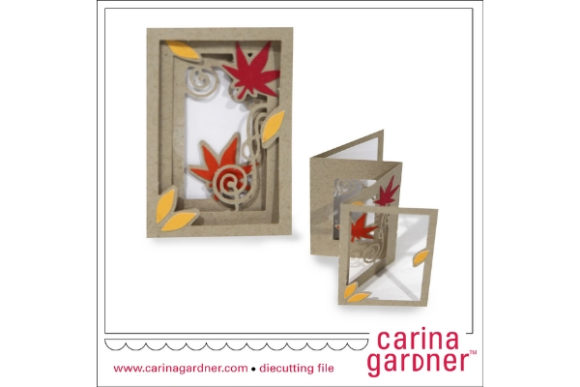
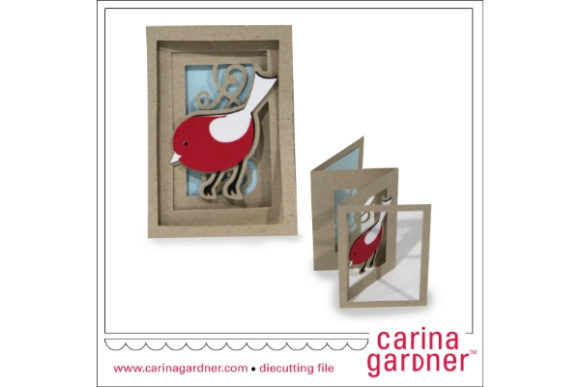
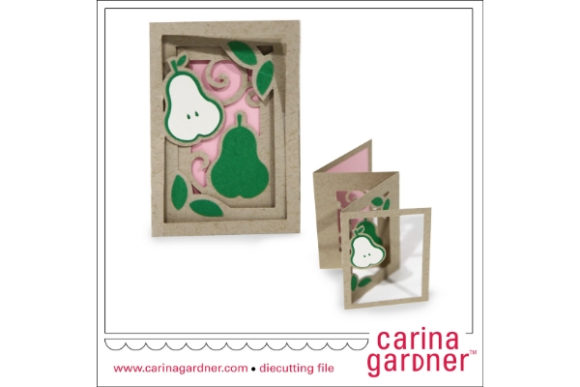
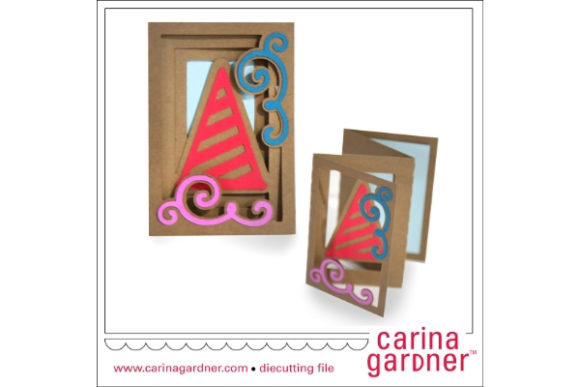
The Accordion Party Hat Card is a tactile, multi-panel greeting card designed to unfold like a fan or concertina—revealing layered messages, illustrations, or interactive elements as the recipient opens it. Unlike standard flat cards or pop-ups with rigid mechanisms, its structure relies on evenly spaced, parallel folds that allow smooth, sequential expansion. This creates a playful rhythm of discovery: each panel can hold a different sentiment, visual motif, or even a small surprise like a mini photo or QR code linking to a video message.
What sets the Accordion Party Hat Card apart isn’t just novelty—it’s functional versatility. Its linear, segmented layout supports narrative pacing, making it well-suited for milestone celebrations where timing and progression matter: birthdays with age-based wishes (“5 years old,” “10 years old,” “15 years old”), anniversary countdowns, or even lighthearted “reasons why we love you” lists. Because panels are independent yet connected, designers can assign distinct tones or formats per section—text on one, illustration on the next, foil stamping on another—without compromising structural integrity.
How It Differs From Other Interactive Card Formats
Compared to traditional greeting cards, the Accordion Party Hat Card offers more physical engagement than a flat insert but less mechanical complexity than a full pop-up. Pop-up cards often require precise die-cutting and glue points, which can limit customization and increase production time. In contrast, accordion construction uses consistent fold lines and minimal assembly—making it more adaptable for small-batch printing, handcrafted versions, or digital print-on-demand services.
Fold-out cards (like gatefolds or Z-folds) share some spatial economy but lack the rhythmic, stepwise reveal. A Z-fold delivers three panels in a single motion; an accordion can easily accommodate five, seven, or nine panels—each unfolding deliberately. That makes it especially useful when content benefits from segmentation: a birthday card might list favorite memories chronologically across panels, while a baby shower card could highlight developmental milestones month by month.
Unlike pull-tab or slider mechanisms—which rely on hidden tracks or moving parts—the accordion’s motion is intuitive and durable. There’s no risk of misalignment, broken tabs, or jammed sliders after repeated handling. It also scales well: a compact 4″ × 6″ version fits in a standard envelope, while larger 5″ × 10″ versions remain mail-friendly with minimal extra postage.
Strengths and Practical Tradeoffs
The primary strength of the Accordion Party Hat Card lies in its balance of expressiveness and reliability. It accommodates rich visual storytelling without sacrificing usability. Designers appreciate how each panel functions as a discrete canvas—ideal for branding consistency (e.g., matching color blocks or repeating motifs), accessibility (larger text per panel), or multilingual messaging (one language per section). For recipients, the unfolding action feels celebratory and unhurried, encouraging slower engagement than scrolling through a digital card.
However, there are tradeoffs. Because the card must remain physically stable across multiple folds, paper weight and grain direction matter more than with flat cards. Too light a stock may curl or crease unevenly; too heavy may resist smooth folding or cause bulking in the envelope. Most successful versions use 100–130 lb cover stock with grain parallel to the fold lines—a detail worth confirming with your printer if ordering custom runs.
Another consideration is layout discipline. With multiple panels, there’s greater potential for visual clutter or inconsistent pacing. A well-executed Accordion Party Hat Card guides the eye deliberately: perhaps starting with a bold headline on Panel 1, shifting to personal anecdotes on Panels 2–4, then ending with a warm closing and signature on the final panel. Without intentional sequencing, the format can feel disjointed rather than dynamic.
When It Fits Best—and When It Might Not
The Accordion Party Hat Card shines in contexts where emotional resonance, personalization, and tactile experience are priorities. It’s frequently chosen for milestone birthdays (especially ages with symbolic weight—16, 18, 21, 30, 50), graduations, retirements, and long-term relationship anniversaries. One educator, for example, used a custom accordion card to celebrate her students’ growth over a school year—each panel featured a photo and quote from a different term, culminating in a handwritten note on the last page. The physical act of unfolding mirrored the reflective, forward-looking tone of the occasion.
It’s also effective for hybrid celebrations—those bridging in-person and remote participation. A family scattered across three time zones printed identical accordion cards for a virtual birthday party; each panel included a recorded voice note link (via QR), allowing guests to “open” their part of the celebration at the same moment. That kind of coordinated, layered interaction is harder to replicate with static or single-action formats.
That said, it’s not always the optimal choice. For urgent or logistical communications—think RSVPs, event schedules, or gift registry details—the accordion’s sequential flow can delay access to key information. A guest shouldn’t need to unfold four panels to find the date and address. In those cases, a simpler split-page design or a flat card with a clearly labeled info sidebar may serve better.
Similarly, for very young children or recipients with limited dexterity, the fine motor coordination required to unfold multiple narrow panels may pose a barrier. A sturdy, wide-panel accordion with rounded corners helps—but a single-fold card with lift-the-flap elements or high-contrast visuals may be more inclusive in those instances.
Making an Informed Choice Among Formats
Selecting the right card format involves weighing audience, intent, and practical constraints—not just aesthetics. Ask yourself:
- What’s the core purpose? Is it emotional impact, information delivery, brand reinforcement, or participatory engagement? The Accordion Party Hat Card excels at the first and last—but less so at rapid information scanning.
- Who will interact with it? Consider age, mobility, cultural familiarity with tactile formats, and whether they’ll open it solo or alongside others.
- What’s the production context? Hand-assembled? Print-on-demand? Offset run? Accordion cards work well across all three—but require slightly more setup time than flat sheets, and tighter tolerances than basic tri-folds.
- How much content needs to land—and in what order? If messaging depends on sequence or contrast (e.g., “then vs. now,” “challenge → growth → celebration”), the accordion’s structure supports that naturally.
There’s no universal “best” format—only what aligns most closely with your goals and constraints. The Accordion Party Hat Card occupies a thoughtful middle ground: more expressive than a standard card, more robust than a delicate pop-up, and more intentional than a simple fold-out. Its value emerges not from flashiness, but from how deliberately it invites attention, structures meaning, and honors the occasion through form and function alike.
If you’re evaluating options for a meaningful celebration, consider prototyping two versions: a compact accordion with concise, sequenced messages, and a contrasting format (like a double-sided flat card with layered typography) to compare pacing and emotional impact. Often, the difference isn’t in which looks more impressive at first glance—but which feels more resonant in the hand, and more memorable in the unfolding.